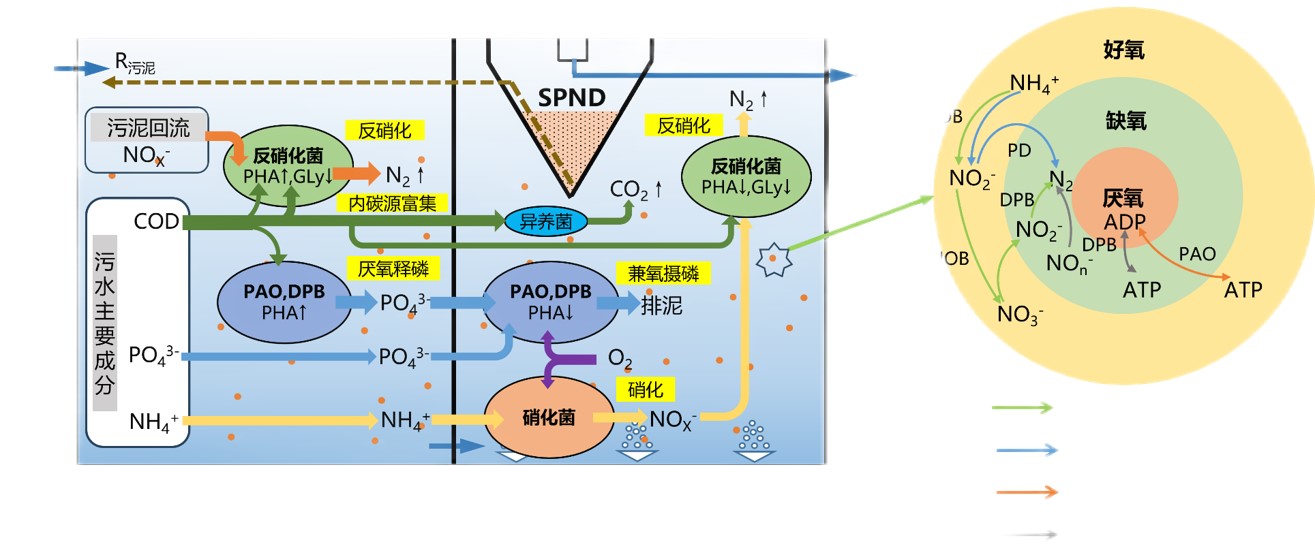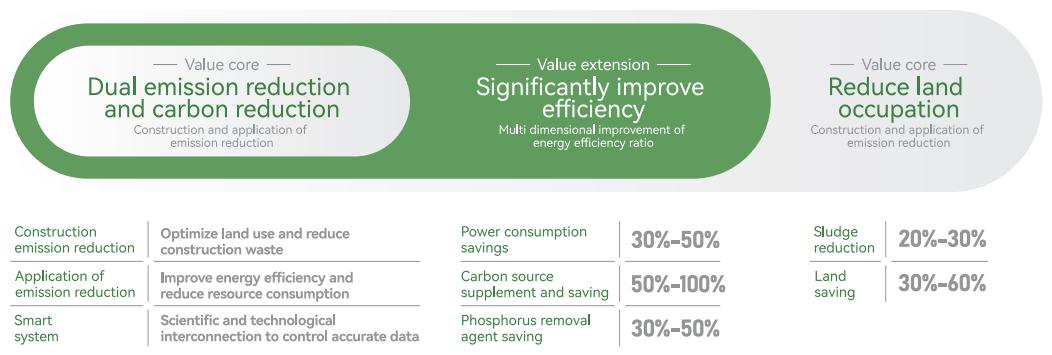
SPND - the third generation of "Smart Tank" aerobic granular sludge technology operates under aerobic conditions, where microorganisms form compact, well-defined dense biological aggregates, known as granular activated sludge, after passing through the SPND - "Smart Tank." Compared to conventional activated sludge, it exhibits characteristics such as resistance to sludge bulking, strong shock resistance, and the ability to withstand high organic loads, integrating various types of microorganisms (aerobic, facultative, and anaerobic). This technology enables short-range nitrification-denitrification and anaerobic ammonia oxidation for effective nitrogen removal, while saving carbon source addition and reducing energy consumption.
The removal of organic pollutants from wastewater primarily relies on microbial metabolic processes, which convert organic and inorganic pollutants into stable, harmless substances. The SPND - "Smart Tank" third generation aerobic granular sludge possesses excellent settling performance, allowing for a higher sludge concentration within the reactor. Typically, the sludge concentration in traditional activated sludge processes ranges from 3000 to 5000 mg/L, while SPND - "Smart Tank" can achieve sludge concentrations of 6000 to 10000 mg/L, with some cases reaching up to 15000 mg/L. Additionally, microscopic examination of aerobic granular sludge reveals dense microorganisms, indicating a diverse microbial community and a well-established food chain structure, thus demonstrating good biological activity. As a result, this technology can rapidly and effectively remove pollutants, nitrogen, and phosphorus from wastewater.